Into the Decade of AI: Transforming Industries and Societies
The impact of AI in the next decade is poised to be transformative across various sectors and aspects of life. Here's a glimpse into some of the key areas where AI is likely to make significant strides:
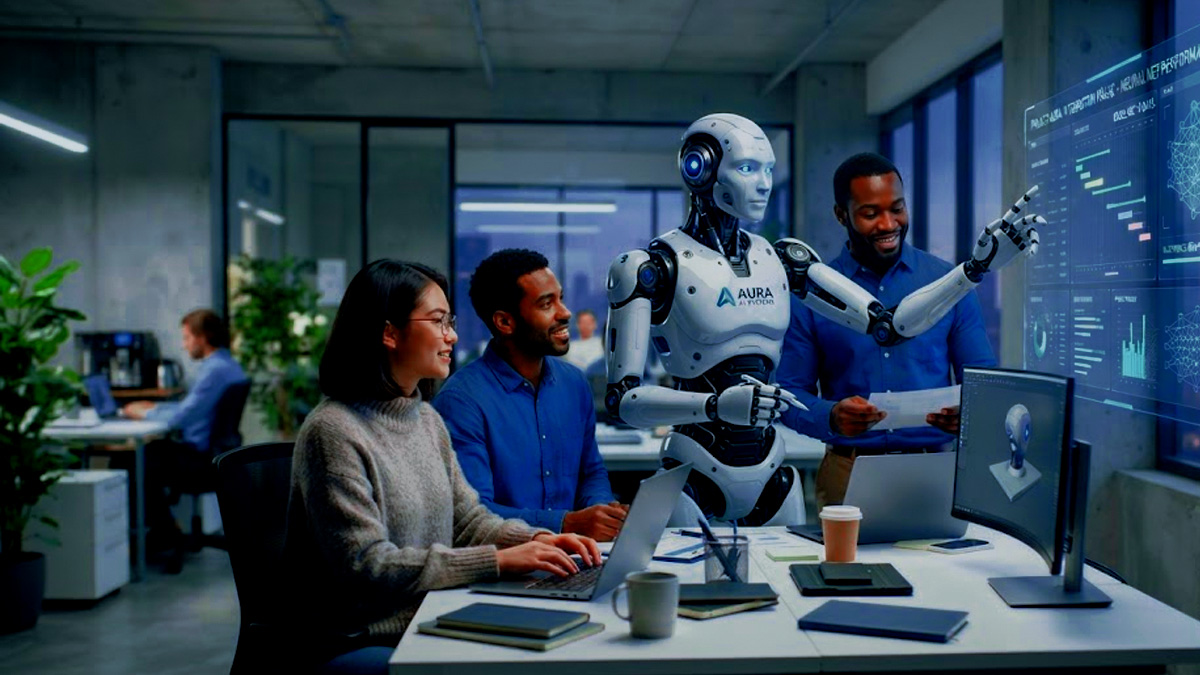
Image related to Into the Decade of AI: Transforming Industries and Societies. (Photo: Metro Daily Reporter)
Artificial intelligence has evolved from a futuristic concept into a driving force reshaping how we live, work, and interact with the world around us. As we stand on the threshold of a new era, the next decade promises to witness AI's transformation from an emerging technology into a ubiquitous force that permeates every aspect of human existence. From healthcare and education to transportation and environmental sustainability, the potential applications of AI are as vast as they are profound. Yet with this unprecedented opportunity comes the responsibility to navigate challenges around ethics, governance, and workforce adaptation. Here is a comprehensive look at the key sectors where AI will leave an indelible mark over the coming ten years.
Healthcare: Revolutionizing Patient Care and Medical Innovation
The healthcare industry stands at the cusp of a revolutionary transformation driven by artificial intelligence. In the coming decade, AI will fundamentally change how we diagnose, treat, and prevent diseases, potentially saving millions of lives worldwide. Advanced machine learning algorithms are already demonstrating remarkable capabilities in analyzing vast repositories of medical data—from electronic health records and genetic information to medical imaging and clinical trial results—to identify subtle patterns that escape human detection. This analytical prowess will enable earlier and more accurate disease detection, particularly in complex conditions like cancer, cardiovascular disorders, and neurodegenerative diseases where early intervention is critical.
Personalized medicine will emerge as a cornerstone of future healthcare, with AI systems tailoring treatment plans to individual genetic profiles, lifestyle factors, and environmental influences. Imagine a world where your treatment regimen is optimized specifically for your unique biological makeup, maximizing efficacy while minimizing adverse effects. AI-driven drug discovery platforms will compress the traditional decade-long timeline for developing new medications, rapidly identifying promising compounds and predicting their safety profiles.
In surgical theaters, AI-powered robotics will enhance precision beyond human capabilities, enabling minimally invasive procedures with remarkable accuracy. These intelligent systems can compensate for natural hand tremors, provide real-time guidance based on preoperative imaging, and even perform certain tasks autonomously under human supervision. Hospital operations, from patient flow management to resource allocation, will be optimized through AI predictive analytics, reducing wait times and improving care delivery. Remote patient monitoring powered by AI will allow continuous health surveillance, alerting healthcare providers to potential issues before they escalate into emergencies.
Education: Personalized Learning for Every Student
The traditional one-size-fits-all approach to education is rapidly becoming obsolete as AI ushers in an era of personalized, adaptive learning experiences. Intelligent tutoring systems will assess each student's knowledge level, learning pace, and preferred styles, then dynamically adjust curriculum and instructional methods accordingly. This level of customization ensures that students receive targeted support in areas where they struggle while being appropriately challenged in subjects where they excel, maximizing learning outcomes for every individual regardless of background or ability.
AI-powered platforms will serve as tireless educational companions, providing instant feedback, answering questions, and offering alternative explanations when concepts prove difficult. These systems will track progress over time, identifying learning gaps and suggesting remedial materials long before students fall behind. For students with special educational needs, AI will offer tailored accommodations, breaking down barriers to inclusive education.
For educators, AI will serve as an invaluable assistant, automating time-consuming tasks like grading assignments, generating progress reports, and organizing administrative workflows. This frees teachers to focus on what matters most: mentoring, inspiring, and building meaningful relationships with their students. AI-driven curriculum design tools will help teachers create more engaging and effective lesson plans, while predictive analytics will identify students at risk of dropping out, enabling timely interventions. The classroom of the future will be a dynamic blend of human expertise and artificial intelligence, creating learning environments that are more engaging, equitable, and effective than anything previously possible.
Transportation: Redefining Mobility and Urban Infrastructure
The transportation sector is undergoing its most profound transformation since the invention of the automobile, with AI serving as the engine of this revolution. Self-driving vehicles will transition from experimental prototypes to everyday reality, fundamentally changing how people and goods move through cities and across countries. Autonomous ride-hailing services will reduce the need for individual car ownership, potentially decreasing the number of vehicles on roads and alleviating urban congestion. For elderly and disabled individuals, autonomous vehicles will provide unprecedented mobility and independence.
Beyond individual transportation, AI will optimize entire transportation networks through intelligent traffic management systems. These systems will analyze real-time data from cameras, sensors, and connected vehicles to dynamically adjust traffic signals, reroute traffic around congestion, and coordinate emergency vehicle responses. The result will be smoother traffic flow, reduced travel times, and significant decreases in accidents caused by human error. Freight and logistics operations will achieve new levels of efficiency, with AI planning optimal delivery routes, managing warehouse operations, and coordinating autonomous delivery fleets.
Looking further ahead, AI will enable next-generation transportation technologies like hyperloop systems and urban air mobility. These futuristic modes of transport, guided by sophisticated AI navigation and safety systems, will connect cities in ways previously imagined only in science fiction. Public transit will become more responsive and efficient, with AI predicting demand patterns and adjusting schedules in real-time. As these technologies mature, our relationship with distance and travel will be fundamentally redefined.
Finance: Intelligent Systems Reshaping Money Management
The financial industry, already transformed by digital technology, will experience even more profound changes as AI becomes deeply embedded in banking, investing, and financial services. Fraud detection systems powered by machine learning will analyze transaction patterns in milliseconds, identifying suspicious activities with far greater accuracy than traditional rule-based approaches. These systems will continuously adapt to evolving fraud techniques, providing robust protection for consumers and institutions alike.
Algorithmic trading, already significant in financial markets, will become even more sophisticated as AI systems process vast amounts of data from news sources, social media, economic indicators, and market trends to make split-second investment decisions. While concerns about market stability persist, these systems can also help identify systemic risks and provide early warning signals of potential financial crises.
In retail banking, AI-powered chatbots and virtual assistants will handle customer inquiries, process transactions, and provide personalized financial advice around the clock. These systems will help customers manage budgets, save for goals, and make informed investment decisions based on their personal circumstances. Credit assessment will become more nuanced and inclusive, with AI evaluating alternative data sources to extend financial services to previously underserved populations. Risk management across the entire financial ecosystem will be enhanced through sophisticated predictive modeling, making the global financial system more resilient to shocks and disruptions.
Environment: AI as a Force for Climate Action and Sustainability
Perhaps no area offers more urgent potential for AI intervention than environmental protection and climate change mitigation. As humanity confronts the escalating challenges of global warming, biodiversity loss, and resource depletion, AI provides powerful tools for understanding these complex systems and developing effective solutions. Machine learning algorithms will analyze satellite imagery, climate models, and sensor networks to predict natural disasters with increasing accuracy, enabling more effective evacuation and response planning that can save lives and reduce economic losses.
Energy systems will become dramatically more efficient through AI-powered smart grids that balance supply and demand in real-time, integrating renewable energy sources like solar and wind while minimizing waste. Smart building systems will optimize heating, cooling, and lighting based on occupancy patterns and weather conditions, significantly reducing energy consumption. In agriculture, AI-powered precision farming will optimize irrigation, fertilizer application, and crop management, increasing yields while reducing environmental impact. These technologies will be essential for feeding a growing global population under increasingly challenging climate conditions.
AI is also being deployed to monitor and protect ecosystems, tracking wildlife populations, detecting illegal logging and fishing, and assessing the health of forests, oceans, and biodiversity hotspots. Climate modeling will become increasingly sophisticated, helping scientists understand the long-term trajectory of environmental changes and evaluate the effectiveness of various mitigation strategies. The transition to a circular economy will be accelerated through AI-optimized recycling systems and supply chain management that minimizes waste. While technology alone cannot solve the climate crisis, AI will be an indispensable tool in humanity's arsenal.
Workforce: Navigating Automation and New Opportunities
The impact of AI on employment is perhaps the most debated aspect of the technological revolution, and the next decade will bring both displacement and opportunity. Many routine, repetitive tasks across various industries will be increasingly automated, from manufacturing and logistics to customer service and data processing. Jobs that involve predictable physical labor or basic cognitive tasks are most susceptible to automation. However, history suggests that technological revolutions, while disruptive, ultimately create new categories of employment that were previously unimaginable.
The AI-driven economy will generate substantial demand for workers skilled in AI development, data science, machine learning engineering, and related technical fields. Equally important will be roles focused on human-AI collaboration, requiring workers who understand how to work alongside intelligent systems effectively. Jobs that require emotional intelligence, creative problem-solving, complex decision-making, and human interaction—areas where AI currently struggles—will become increasingly valuable. Healthcare providers, educators, creative professionals, and skilled tradespeople will find their expertise in high demand.
The transition will require significant investment in education and training programs that prepare workers for the evolving landscape. Upskilling and reskilling initiatives will become essential components of economic policy, with governments, educational institutions, and private enterprises collaborating to ensure that displaced workers can transition to new roles. Lifelong learning will become the norm rather than the exception, with workers regularly updating their skills throughout their careers. The future workplace will be characterized by humans and AI systems complementing each other, combining the strengths of both to achieve outcomes neither could accomplish alone.
Ethics and Governance: Building Responsible AI Frameworks
As AI becomes more pervasive and powerful, questions of ethics, accountability, and governance become increasingly urgent. The next decade will see the development of comprehensive regulatory frameworks aimed at ensuring that AI systems are developed and deployed in ways that respect human rights, protect privacy, and promote fairness. Bias in AI algorithms—which can perpetuate and amplify existing societal inequalities—will be subject to increasing scrutiny, with requirements for transparency, auditing, and accountability becoming standard practice.
Privacy concerns will drive the development of new AI techniques that enable powerful analytics while preserving individual confidentiality. Federated learning, differential privacy, and other privacy-preserving technologies will allow organizations to extract insights from data without compromising personal information. Clear standards for AI transparency will emerge, requiring systems to explain their decisions in understandable terms, particularly in high-stakes areas like criminal justice, healthcare, and financial services. The "black box" problem of complex AI systems will be addressed through explainable AI research and regulatory requirements for algorithmic accountability.
International cooperation will be essential for addressing the global dimensions of AI governance. Nations will need to collaborate on establishing common standards, sharing best practices, and developing mechanisms for addressing AI-related harms that cross borders. The potential for AI to disrupt geopolitical stability—through autonomous weapons, disinformation campaigns, or economic disruption—will require careful diplomacy and coordinated action. At the same time, equitable access to AI benefits will become a matter of international concern, with efforts to bridge the digital divide and ensure that developing nations are not left behind in the AI revolution.
Conclusion: Embracing the AI-Powered Future
As we look ahead to the next decade, the trajectory of artificial intelligence is clear: it will become an increasingly integral part of how we live, work, and solve problems. The potential benefits are immense—better healthcare, more effective education, sustainable environmental solutions, and enhanced economic productivity. Yet realizing this potential requires thoughtful leadership, responsible governance, and a collective commitment to ensuring that AI serves the broader good rather than narrow interests.
The transformation will not be without challenges. Displaced workers will need support and retraining. Ethical concerns will require rigorous attention. Privacy must be protected even as data powers AI innovation. However, these challenges are not insurmountable. With careful planning, inclusive dialogue, and international cooperation, humanity can navigate the transition to an AI-driven world while preserving the values that define us.
The decade ahead promises to be one of remarkable transformation. Those who embrace the opportunities of AI while thoughtfully addressing its challenges will be best positioned to thrive. The future is not predetermined; it is being shaped by the choices we make today. By approaching the AI revolution with optimism, creativity, and responsibility, we can build a future where intelligent machines amplify human potential and help us address the most pressing challenges of our time.

Related Articles